Liveblog of OJCS EdCamp

Are you curious how we are spending our time during our “Professional Day” today at OJCS?

Well, the first part of the day will be an “EdCamp”!

What is “EdCamp”?

EdCamp is an “unconference” – an opportunity, without intense preparation or anxiety for teachers to “own” their professional learning.  Teachers will show up at edcamp and find a blank schedule – only time slots and locations.  They will then decide what topics they want to present on or which conversations they wish to facilitate and simply sign up until the schedule is complete.  And then the learning begins!

Sounds simple, which it is, but its power is in recognizing how much teachers already have to offer and how strong their desire is to learn from each other.  It is also an important acknowledgment that they are already experts in important topics and, thus, there is no need for intense preparation – simply share the work.

Today, I’m going to liveblog our first OJCS EdCamp to give you a taste…

9:00 AM Blank Board
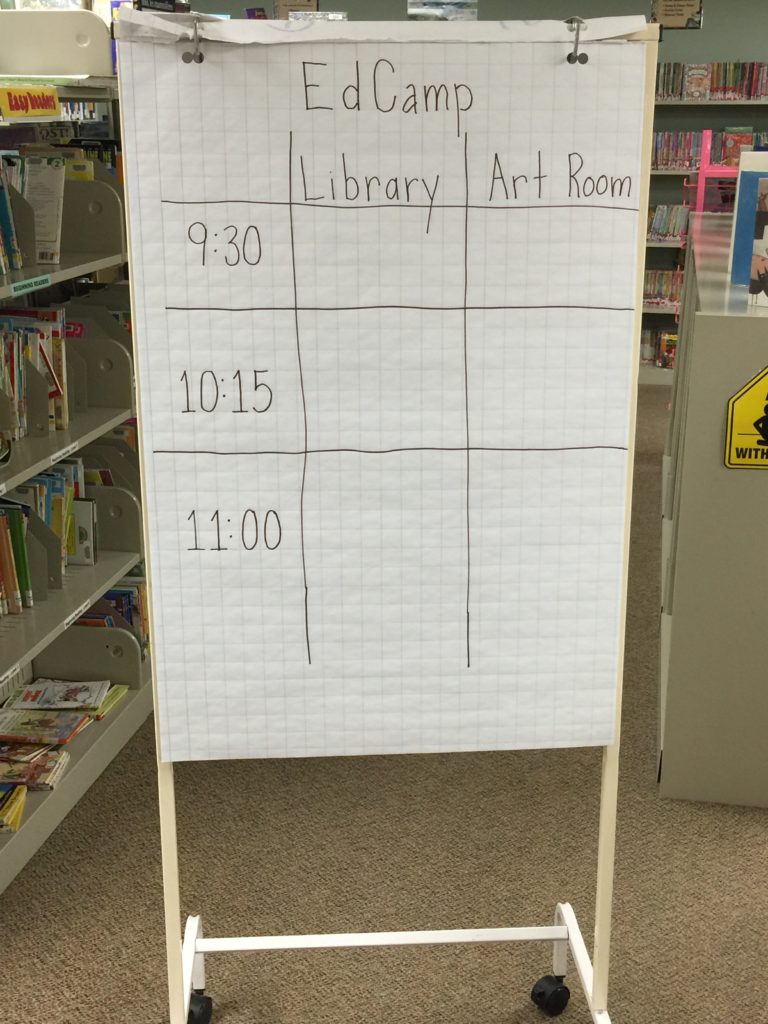
9:30 AM OJCS EdCamp is Ready to Launch!
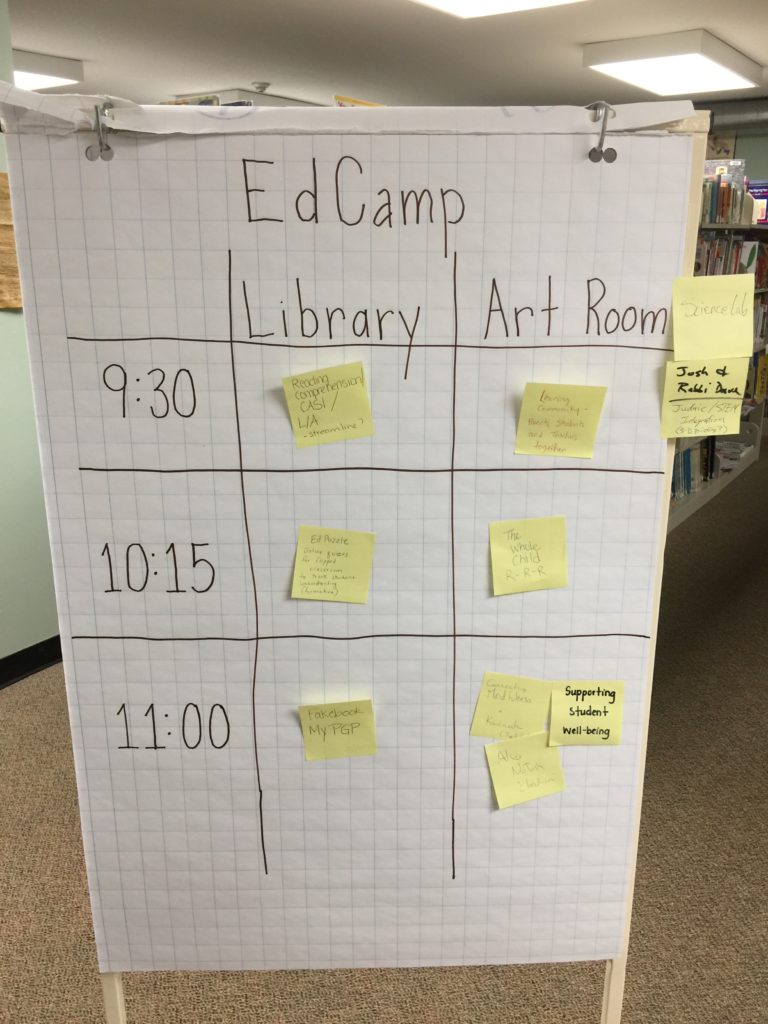
Session #1: A Conversation About Language Arts
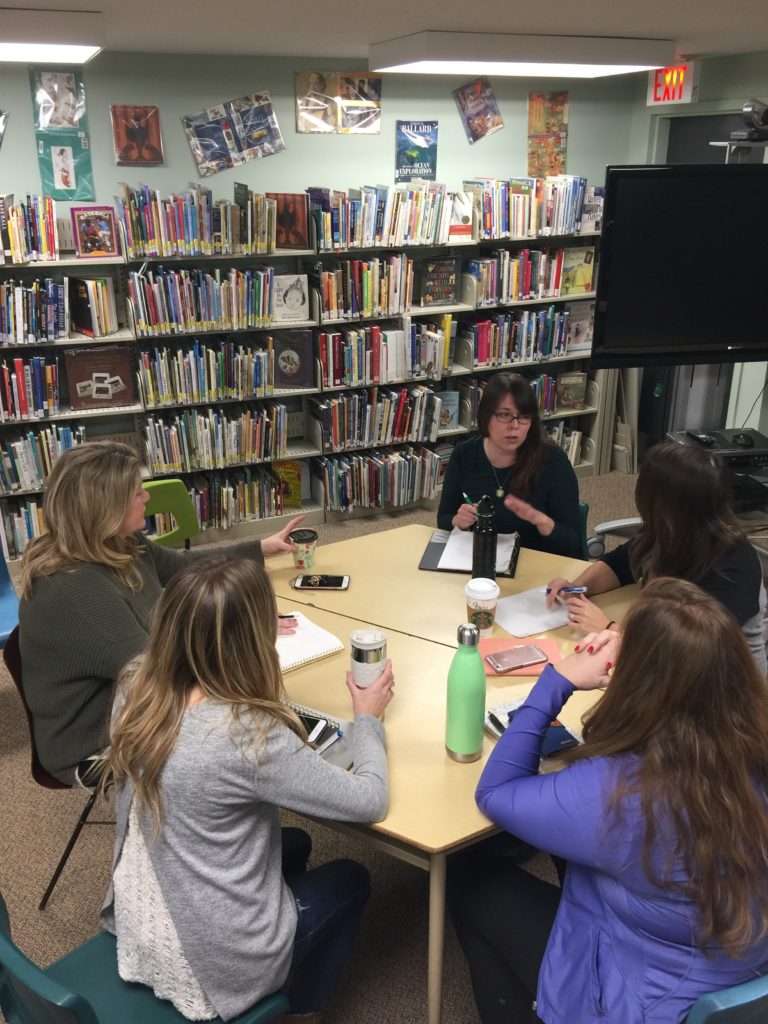
OK…we are up and running!

We have Language Arts teachers across the grades, along with the Librarian, are having a meaningful conversation about how we currently assess students in language arts – which assessments, which benchmarks, etc., – and how we have been and should use the data to help students.

Teachers are engaged in conversation around the CASI Reading Assessment that we currently use in Grades 4 and higher.  Teachers are sharing how they are currently using it.  The Librarian is sharing a little about the other kinds of reading assessments she has been exploring.  Our school also currently uses RAZ in Grades K -3.

What is great about the conversation is the attempt to connect the dots between the grades, between the assessments and about being clear about who the audiences are for the data – is this for students, teachers, parents, all of them, etc.?

I have to go peek in on the other sessions…but I look forward to seeing what emerges out of here and how it will enhance reading at OJCS!

Session #2: Exploring Collaborations Between STEM & Jewish Studies
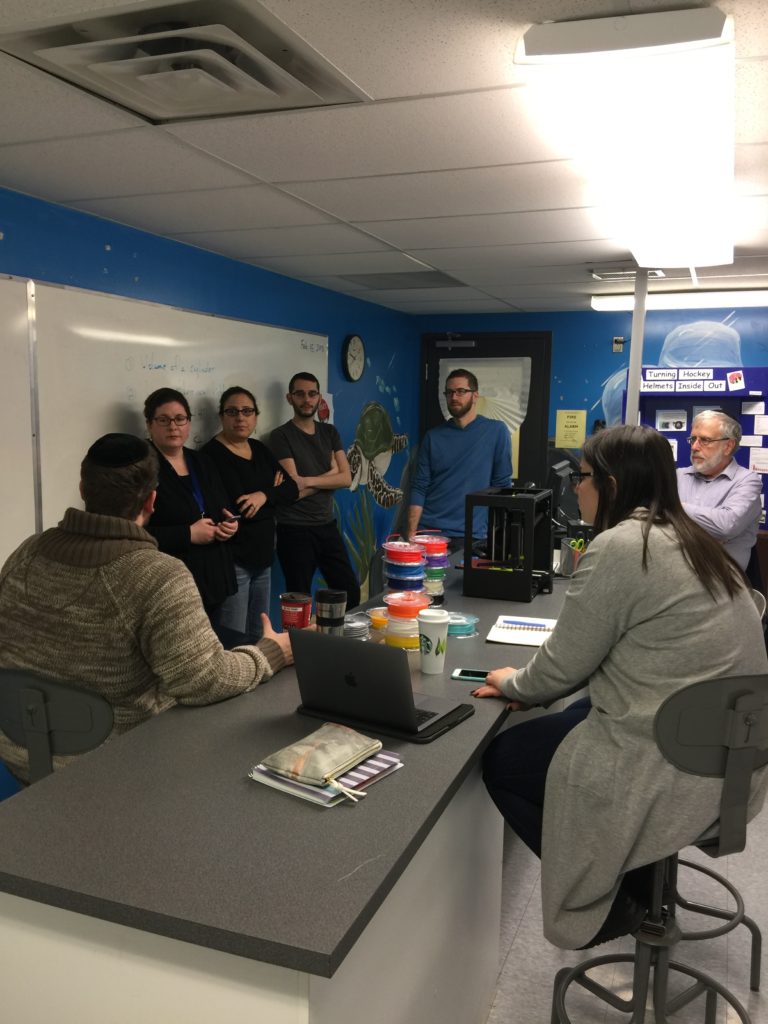
What a great session!

We have Science and Jewish Studies Teachers exploring how to integrate our new 3D printer with Jewish Studies content.  This is what the magic of Jewish day schools is all about!  They are getting a tour of how the new 3D printer works and exploring fascinating opportunities for integrating Jewish Studies content.  What if we wanted to create a model of the Temple in Jerusalem?  What if we wanted to make a dreidel?

We can!  And imagine what it will do to inspire student engagement…

They are about to print a key just to see how it works, but the ideas that flow out of here are going to dramatically impact project-based learning at our school?  How?  Stay tuned!

Session #3: How Can Teachers, Parents & Students Learn Together?
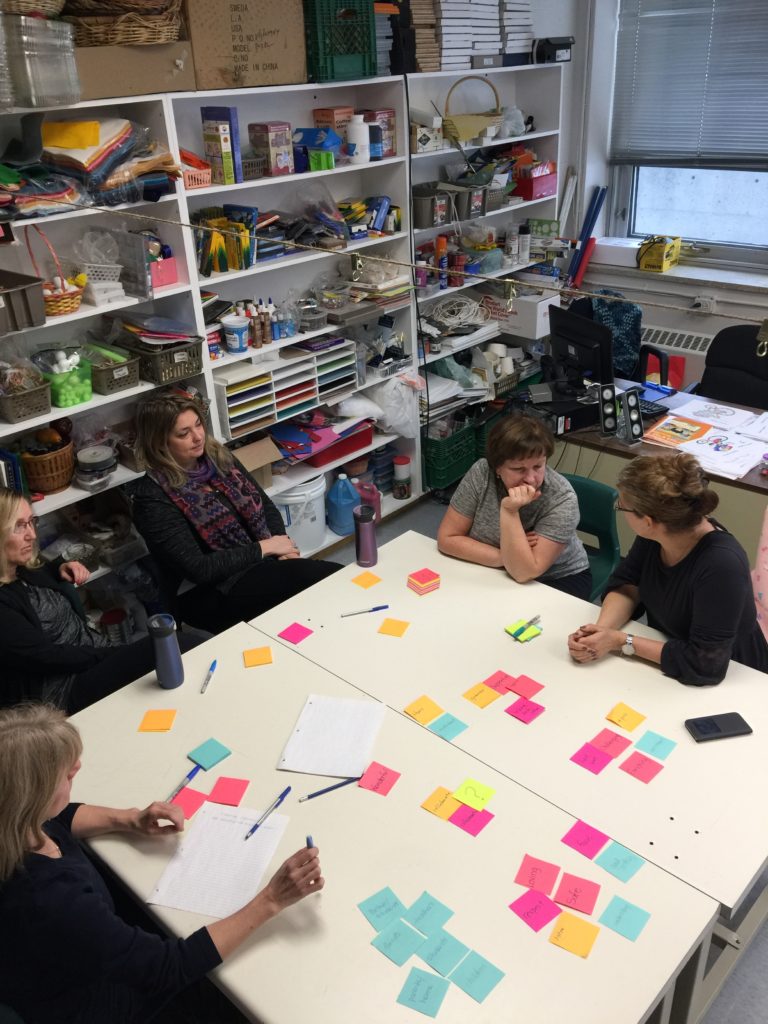
Jumping in to the end of a session is always hard, but I can tell just from the layout of the table that the impact of the Design Team is already beginning.  They are engaged in data immersion as all those post-it notes will be created, synthesized and lead to new ideas and prototypes.  They have been engaged in design thinking around a prototype for Passover this year that leads to a family learning experience.
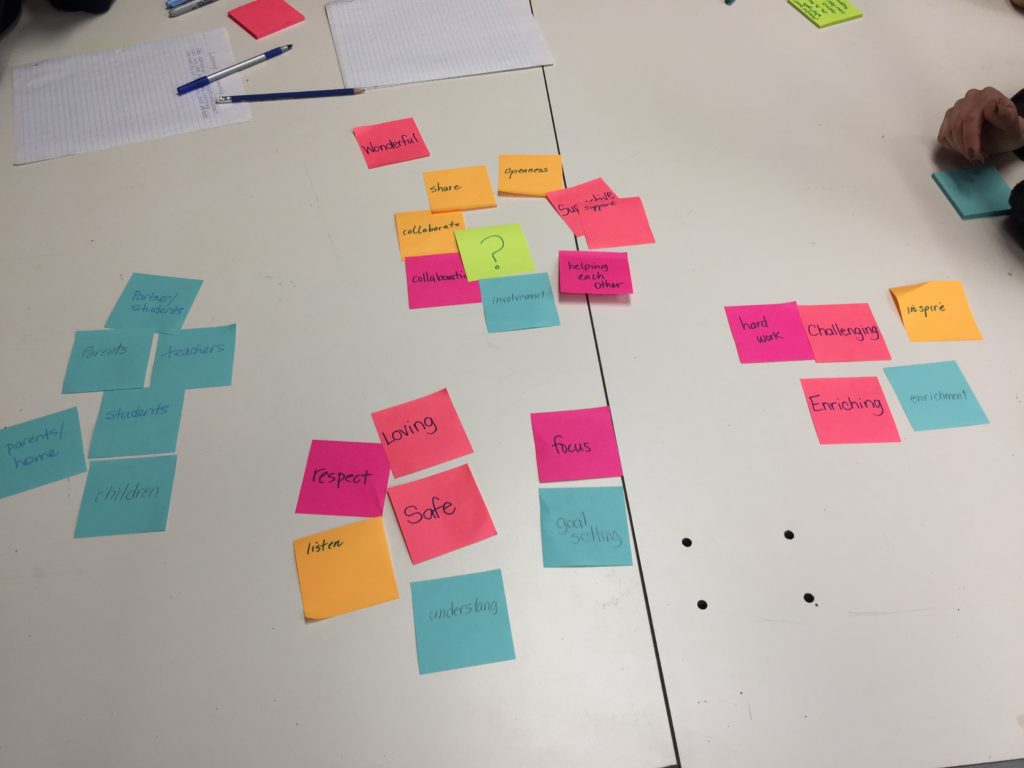
Teachers are sharing examples from prior years and are practicing the art of asking deeper questions.  For example, “What do parents really learn from some of our family experiences?”  If you want parents to be meaningfully engaged in the learning, you will need to consider them as learners in the planning.

Part of the conversation shifts to how to schedule best to accommodate parents…

But the most unexpected and amazing part of this conversation is listening to two non-Jewish teachers talking with passion about “derekh eretz” and how important the “Jewish” is for our families.  It reinforces a few things…

all teachers and staff at a Jewish day school are Jewish educators.

…that there is no reason for “OJCS” to exist, if not for the “J”.

…parent engagement is a critical component for making it true.

As the conversation moves towards the end, they are having a remarkable conversation about how religion and faith have changed in society at large and how it impacts parent engagement at OJCS.

Session #4: edpuzzle
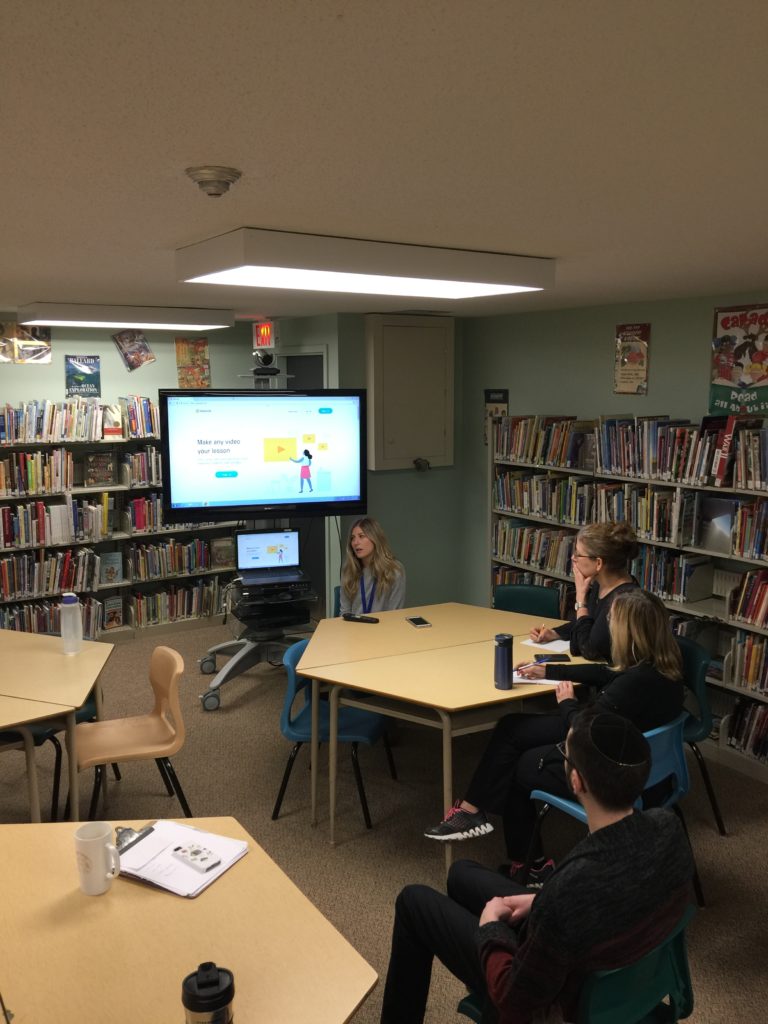
Our Grade 6 General Studies Teacher is explaining her experiments this year in employing a flipped pedagogy for the teaching of mathematics.  She is showing them how she creates videos of herself teaching and how, using edpuzzle, she imports questions directly into the video so that after each concept is introduced, the video automatically stops and a quiz pops up that requires a student response.  She is then showing them how she can check the data the next day including…

…did they watch the video?

…how did they do on the quizzes?

The big idea being that she is then able each day, based on the data, to tailor that day’s work according to which students grasped which concepts.  She can group students together according to their exact needs, can assign more targeted schoolwork, decide who needs teacher attention, etc., and it can totally change day to day based on student needs.

Teachers are now asking great questions about how to use this pedagogy with other topics and other grade levels.  What does this look like in a Grade 3 Social Studies class?  Grade 8 Jewish Studies?

Teachers are now asking great questions about how to create the flipped videos (she uses the app “Explain Everything“).

I have a feeling we will see more flipping at OJCS in months ahead…

Session #5: A Conversation About the Whole Child
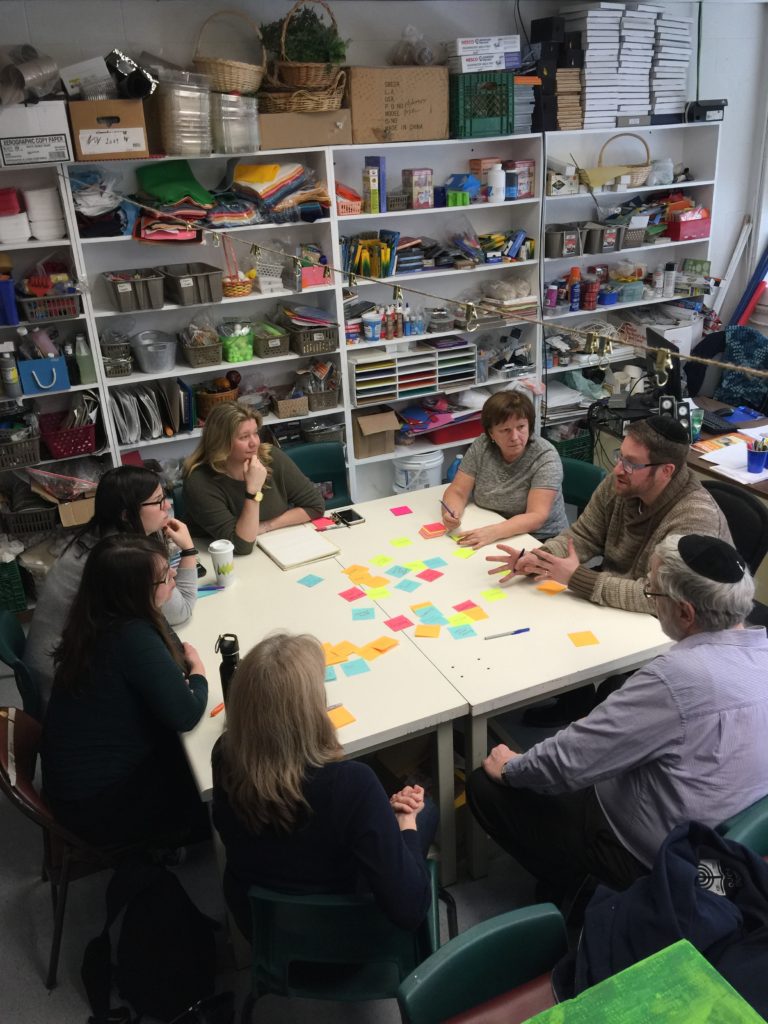
Walking into a great conversation about what matters most in education…

…is it about how much they know?

…or is it about who they are?

What kinds of memories are being created?

[By the way, I can observe how members of the Design Team have already been impacted by our first site visit by the language they are using, the kinds of questions they are asking their colleagues and the willingness to be risk-takers.]

The conversation has shifted towards how the school can touch souls as well as it touches minds…

Now there is a bit of a healthy debate about whether student-centered learning can work in early language classes…

As the conversation starts to shift towards sharing ideas, the sands are almost through the hourglass and we have to move on to the last round.

Session #6: Supporting Student Mindfulness & Wellbeing
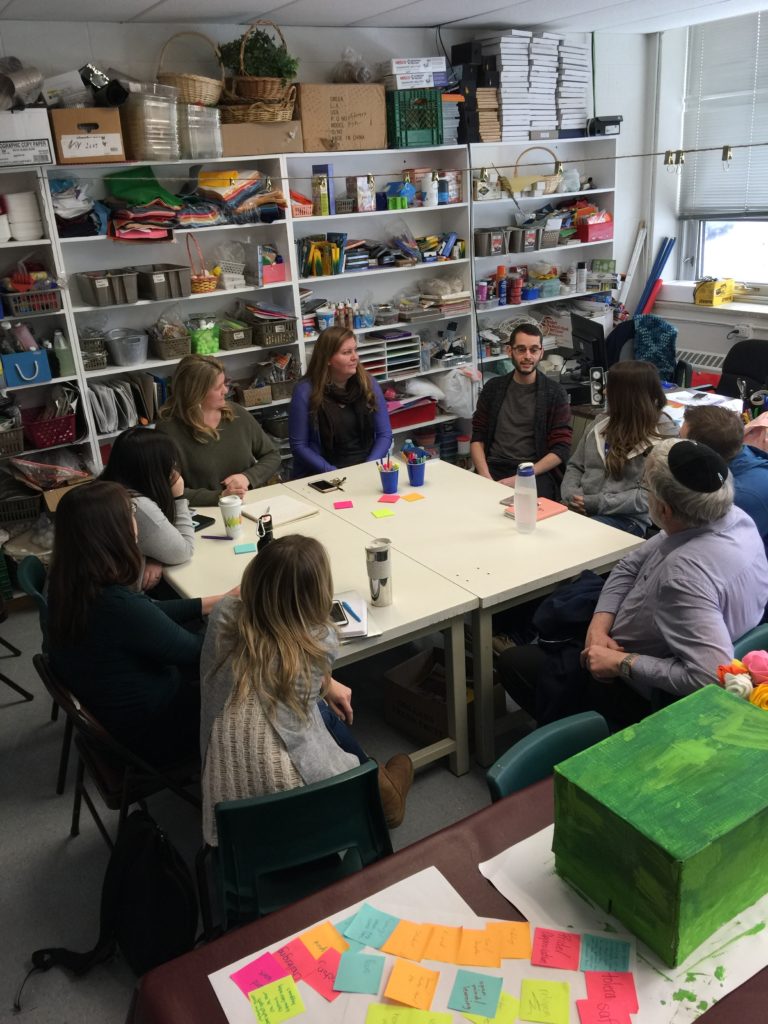
Emerging from the data immersion captured by the Design Team, two members of the team are leading a conversation on how to help students in our school (re)gain “Composure” (one of Ken Robinson‘s 8 “C’s”).

A teacher shares how he marries meditation from Calm and tefillah to enhance kavanah (intentionality)…and how he is also experimenting with Headspace.

That leads to a great conversation with one of our Rabbis about traditional modes of meditation, the impact of meditation on prayer, etc., etc.

Session #7: Fakebook
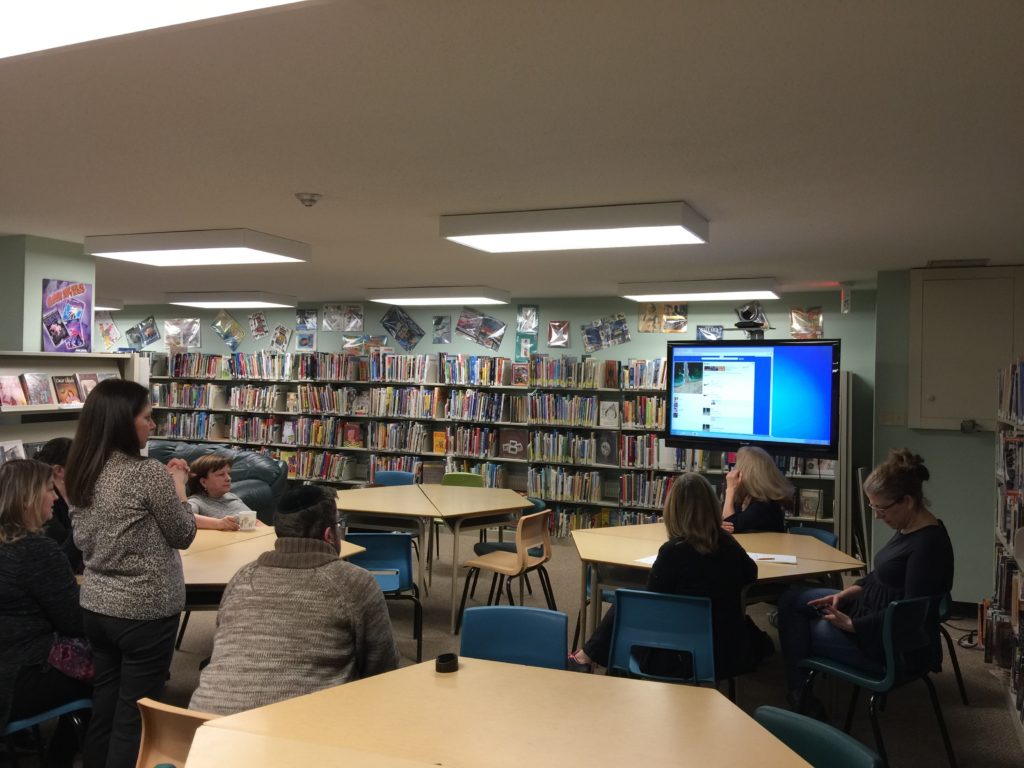
I can’t believe I am popping into our last session!

This is a conversation on how one teacher is incorporating Fakebook as a pedagogy in the teaching of Grade 3 Social Studies.  She is explaining her own learning as well as how she is introducing it with her students.  Teachers are now sharing ideas about how to enhance the unit and creative ways to play with the pedagogy.

This is a lively conversation and it reinforces again (!) how much impact I can see from just one site visit on the Design Team…and the Design Team’s impact on the faculty.

That’s it!  Our first OJCS EdCamp has come to a close.  I can’t wait to see how these conversations will impact teaching and learning at our school.  I look forward to more creative opportunities to harvest the excellence that already is, while adding new ideas to create the future that will be.

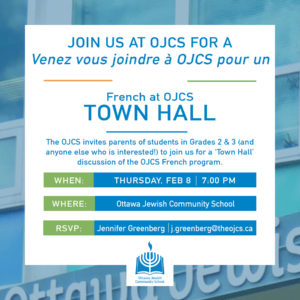
Les Fichiers de Transparence: L’assemblée de Français

As promised, we held a “town hall” on Thursday, February 8th to share back the results of our investigations, thus far; to discuss what we currently believe to be true; and to sketch out next steps.  We were pleased by the turnout and with the candor and seriousness of the conversation (see more below).  We would be happy share out the entire slide deck from the “town hall” so that folks who were unable to attend can be in the know.  Please feel free to email me (j.mitzmacher@theojcs.ca) with your request.  What I would like to do here is walk you through the highlights and offer you the chance to add your voice to the conversation by commenting below.

A few caveats as prologue…

The spirit of this conversation is one of “transparency” – a value we have discussed in depth in prior posts.

You can read an earlier post for a more in-depth history of French education in Ottawa and at the OJCS.

Let’s restate the fundamental issue…

Unlike our Hebrew and Judaic standards, which are entirely our own to determine and whose outcomes are entirely ours to assess, our French standards come from the Ontario Ministry of Education and the schools our graduates attend perform assessments.  So why is this so confusing and chronically debated?

What does French currently look at OJCS?

K:   10/40 Periods in French

1-3:   6/40 Periods in French

4-5:   6/40 Periods in Core French & 8/40 Periods in Extended French

6-8:   6/45 Periods in Core French & 9/45 Periods in Extended French

What kinds of data collection are we doing to better understand the issue?

  • Grade 9 Alumni Surveys
  • Grade 12 Alumni Surveys
  • Conversation with SRB & Ashbury
  • Conversation with Knoxdale
  • Anecdotal Testimonials
  • Exit Interviews (pending)

What did we learn from the Grade 9 Alumni Survey?

74% of Grade 9 students were enrolled in Core French with an additional five students in Immersion and one in Extended French. Of the children enrolled in Extended or Immersion French, no parent reported they needed an extra tutor or extra assistance.

At this point in time, we can see of the six students taking more advanced French, there is no issue with them keeping up.

What did we learn from the Grade 12 Alumni Survey?

Fourteen respondents are attending a public high school in Ottawa, with the vast majority at SRB. One student is attending Ottawa Torah Institute.

Four students indicated they were in Extended French and another two in French Immersion. (This was before SRB dropped “Extended”. Those four “Extended” students are now either in “Core” or “Immersion”.) There was one respondent who did indicate they hired a French tutor to help with Extended French.

The rest of the students (44%) were in Core French.

What did we learn from our conversations with Sir Robert Borden High School?

  • Students are placed in Grade 9 as recommended by OJCS.
  • Some students experience a temporary culture shock transitioning from “Extended” to “Immersion”.
  • Some students see a temporary dip in their grades in Grade 9, but typically recover by Grade 10.
  • Many students come in “super strong”.

What did we learn from our conversations with Ashbury College?

  • “Marks in French are strong.”
  • 1/3 of OJCS students who go to Ashbury graduate with one of their two bilingual diplomas. (Anecdotally, we believe the other 2/3 self-select out, but more data collection will be needed.)

What did we learn from our conversations with Knoxdale Public School?

  • OJCS students who transition into Grade 4 for “middle immersion entry point” are well-prepared for success.
  • Grade 4 is an arbitrary entry point, susceptible to changing public school norms.
  • Students can be accepted into Knoxdale at any point and placed into immersion upon parental request.

What additional/ongoing data collection will be necessary to better refine our understanding of true French outcomes?

It will take additional years of data collection before our sample sizes will allow for more definitive conclusions.  Additional data points that we will collect include exit interviews (families who transition out prior to graduation), testimonials from alumni and alumni parents (we have plenty of positive, anecdotal evidence, but we need a uniform protocol for collection), and adjusting our parent survey data to better determine how many families these issues impact.  We also need to do a deeper dive into the details.  For example, not only how many students earn a bilingual certificate, but do they score well enough to succeed at the next level?

What do we presently believe to be true about French at OJCS?

  • We believe there is a path from here (OJCS Extended French) to there (Grade 9 French Immersion).  We believe we need to better illuminate that path, as well as being open to creating additional paths.
  • We believe that we have passionate, talented, capable, and responsive French teachers who are part of the solution.
  • We believe we need to be more transparent about what needs to be true during the year of transition to set (more) students up to be successful.
  • We believe we will need to collect more data over more years to better answer questions and address concerns.
  • We believe that for some families nothing short of full immersion will be satisfactory and we will have to meaningfully address what that means – for those families and for OJCS.

We believe we can make significant improvements to our current program, and plan to, beginning as soon as next year.

What can we do next year?

  1. Conversations with parents about their hopes and expectations for maximal French contact time need to begin during the admissions process.  Students who may require additional support to place into “Extended” need to be identified early.
  2. The selection process in Grade 3 will be more rigorous, begin earlier, come with more parental engagement, etc., so that students who do continue into “Extended” for Grades 4 and higher are even better prepared for Grade 9.
  3. We will increase the rigor and immersive experience of what contact time we presently make available.  We need to squeeze every moment of immersive French possible.
  4. We will provide additional extracurricular contact time with French through clubs, lunch, etc.
  5. We believe we will be able to adjust our schedule to increase contact time with French.  Stay tuned.

We had in attendance that night our full administration, our French department and a good mix of parents who represented different age groups, different views on the ultimate value of French education, but who demonstrated a shared sense of the issue’s importance, provided meaningfully constructive feedback and exhibited a genuine desire to partner with the school to get it right.

We took good notes from the serious conversation that followed the presentation and I have opened a GoogleDoc to track the feedback and recommendations that we hope continue to come in (see below).  Here are some highlights from that night’s conversation:

  • There was a strong feeling that using Grade 4 as our arbitrary split into “Core” and “Extended” is unnecessary and that we are missing an opportunity to increase the immersive exposure in Grades K-3 when it could potentially have even more value.
  • There was a very positive response to the idea of OJCS offering French enrichment as part of an after school program and/or as part of a summer day camp experience.  This seems like a no-brainer for us to jump on right away.
  • We have energized parents who bring a research background to the conversation and who are willing to help us craft better survey instruments and conduct more thorough analyses to address the issues raised above by way of data collection.
  • A Grade 4 OJCS “middle immersion entry point” may not be a crazy idea.

So.

This is where you come in.  We desperately want to know what you think…

…what questions did this answer for you?

…what questions did this raise for you?

…what do you want to more about?

…what else do you want us to know?

We cannot encourage you more to email, comment or come in for a conversation.  We need all voices heard as we work towards clarifying and enhancing our French mission and vision – next year and the years ahead.

By the way…if you like town halls (and you know you do!)…

Stay tuned for a Town Hall after Passover where will share back the results and the plans we’ve been working on to clarify and enhance the “J” in OJCS!

Go to the Principal’s Office! You’ve Been “Caught Being Kind”!

If each time the school calls is to inform the parent that their child has misbehaved (or is sick or forgot their lunch), one imagines that when the phone rings and the school’s phone number comes up on the “caller ID”, the parent is not exactly excited to pick up.  But what if just every now and again we are calling to let them know how proud we are of their child?

How often do principals or heads of school get to call parents with good news?

We are on a mission at OJCS to inspire acts of lovingkindness by building a community of caring.  We want to be a school where we proactively avoid unkind behavior through explicit skill-building and incentivizing menschlichkeit, not (only) reactively addressing unkind behavior through meaningful consequences.  Our students are engaged in the work through Knesset (our student government) and our faculty are engaged in the work through its “Minds Up!” committee.  And the administration is eager to play its part as well…

If each time you were sent to the “principal’s office” was because you were in trouble, you probably wouldn’t want to be hanging out in that part of the building.  And if a principal only spent his or her time with students referred for misbehavior, there would be a significant gap in relationships.

As part of developing this spirit of leadership and a community of caring in our school, how wonderful would it be if each of our students – and our parents and teachers – held the additional title of “Kindness Ambassador”!

One step we look to take right away is to empower our teachers to start sending students to us when they do something kind.  We look forward, as an administration, to focusing on positively rewarding kind behavior as much, if not more, than applying consequences to unkind behavior, so that when the phone rings in the home of an OJCS parent and the school comes up on the “caller ID” that the emotion it triggers is excitement and not dread. Pick up the phone when we call…your child may have been caught in the act of being kind!

As promised